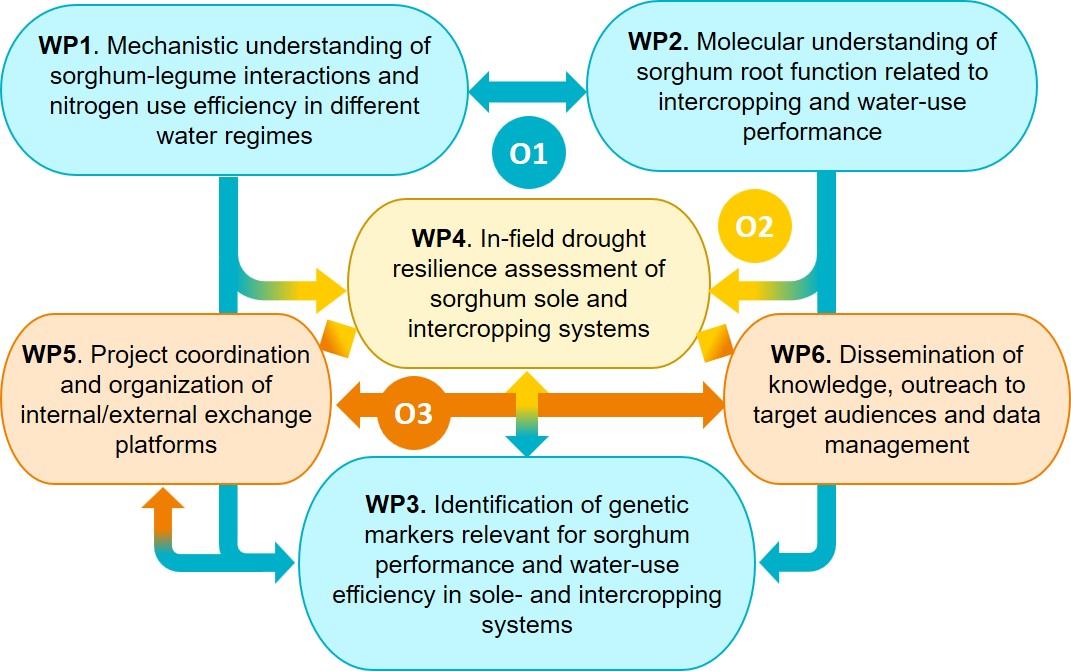
WP1 – Mechanistic understanding of sorghum–legume interactions
WP1 studies how sorghum roots, carbon and nitrogen flows, and the rhizosphere microbiome respond to drought and intercropping with legumes. Greenhouse experiments compare different sorghum genotypes, cropping systems and water regimes, including root morphology measurements and ¹³C/¹⁵N tracing of nutrient transfer.
WP2 – Molecular understanding of sorghum root function
WP2 investigates the molecular responses of sorghum roots to drought and intercropping. Root samples are analysed using metabolomics and transcriptomics to identify important metabolites, genes and pathways linked to drought resilience and intercropping performance.
WP3 – Identification of genetic markers
WP3 links sorghum genetic variation with root traits, drought responses, metabolism and field performance. Genotyping and SNP profiling are used to identify candidate genes and markers that could support breeding for drought resilience and improved intercropping performance.
WP4 – In-field drought resilience assessment
WP4 evaluates sorghum and sorghum–legume systems in field trials in Ethiopia and Australia. High-throughput root phenotyping, including DualEM measurements, is combined with yield, root and soil data and APSIM modelling to identify root traits and management practices that improve drought resilience and yield stability.
WP5 – Project coordination and exchange platforms
WP5 coordinates project management, scientific activities, data sharing and communication between partners. It also supports the project website, data-management tools, breeder–researcher exchange platform, meetings, workshops and the final symposium.
WP6 – Dissemination and outreach
WP6 focuses on communicating ORACLE results to breeders, farmers, researchers and other stakeholders. It includes developing a database of tested and potential sorghum–legume combinations, publishing scientific results, presenting at conferences, and producing factsheets, brochures and short communications to support the practical use of project findings.