ORACLE
Optimising crop root growth and function for enhanced drought resilience in legume–sorghum intercropping
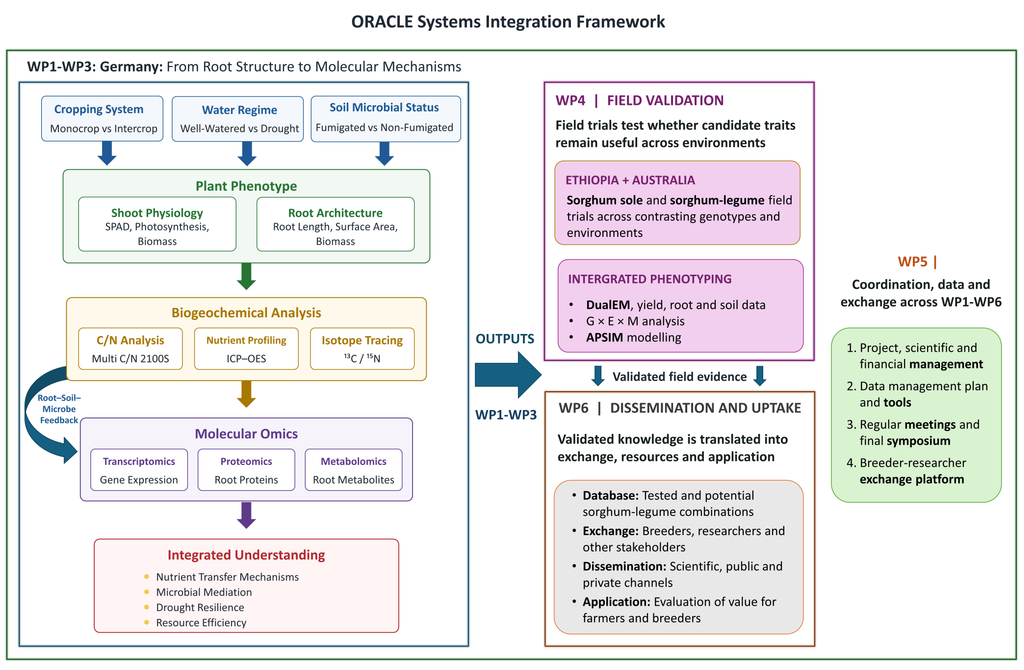
ORACLE is an international research project investigating how sorghum root traits, intercropping with legumes, soil interactions and drought conditions influence crop performance. By combining controlled experiments, field phenotyping, molecular analyses and crop modelling, ORACLE aims to support the development of more resilient and resource-efficient sorghum-based cropping systems.


About ORACLE
Drought is one of the major limitations to crop production worldwide. Roots play a central role in how plants access water and nutrients, yet many root traits remain difficult to measure and are still poorly integrated into breeding and crop management.
ORACLE brings together expertise from Germany, Australia and Ethiopia to better understand sorghum root function under drought and intercropping conditions. The project combines greenhouse and field experiments with root phenotyping, rhizosphere and microbiome analyses, metabolomics, transcriptomics, genotyping and modelling.
Our Impact
ORACLE aims to generate knowledge and tools that support the development of drought-resilient sorghum varieties, more efficient sorghum–legume cropping systems and improved use of water and nitrogen in agriculture.
Our Research
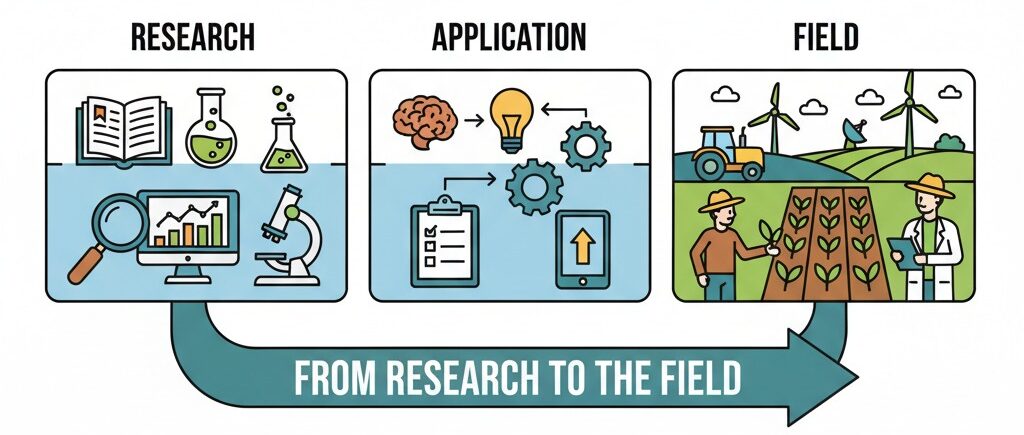
ORACLE connects different levels of crop research to understand and improve drought resilience in sorghum-based systems.
Root Phenotyping
Characterising root architecture, rooting depth and root activity under different environmental conditions.
Drought Resilience
Understanding how different sorghum genotypes respond to water limitation.
Sorghum–Legume Intercropping
Investigating interactions between sorghum and legumes such as cowpea and soybean.
Rhizosphere and Microbiome
Studying how roots, soil microorganisms and nutrient flows interact under drought and intercropping.
Molecular and Genetic Analysis
Using metabolomics, transcriptomics and genotyping to identify mechanisms and traits associated with drought resilience.
Field Phenotyping and Modelling
Combining field measurements with DualEM-based root phenotyping and APSIM modelling to evaluate crop performance across different environments.
Latest Activities
Follow the latest ORACLE activities, including:
- Field experiments and sorghum trials
- DualEM-based root phenotyping
- Greenhouse experiments
- Partner meetings and scientific workshops
- Breeder and stakeholder exchange
- Training and capacity-building activities



ORACLE Across Three Continents
Germany
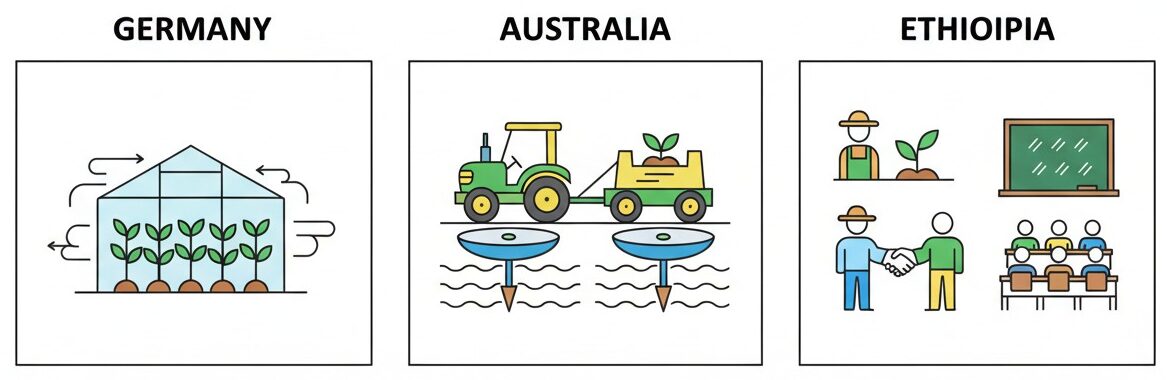
Controlled greenhouse experiments focus on root morphology, carbon and nitrogen flows, rhizosphere microbiomes and molecular responses of sorghum under drought and intercropping.
Australia
Advanced field phenotyping and modelling are used to study root activity, crop water use and the value of contrasting root traits under different growing conditions.
Ethiopia
Field trials, sorghum germplasm evaluation, breeder engagement and capacity building connect ORACLE research directly with local production conditions and breeding priorities.
Connecting Controlled Experiments with Field Research
ORACLE links controlled laboratory and greenhouse experiments with comparable field trials in partner countries. Standardized sampling of plants, roots and soil allows findings from controlled conditions to be evaluated under real production environments. Joint experimental work, field visits, method exchange and capacity-building activities strengthen partner institutions. Breeders and agricultural stakeholders contribute practical knowledge, support the selection of relevant crop materials and provide feedback on the research outcomes.