
ORACLE: Optimizing Crop Root Growth and Function to Enhance Drought Resilience in Legume-Sorghum Intercropping
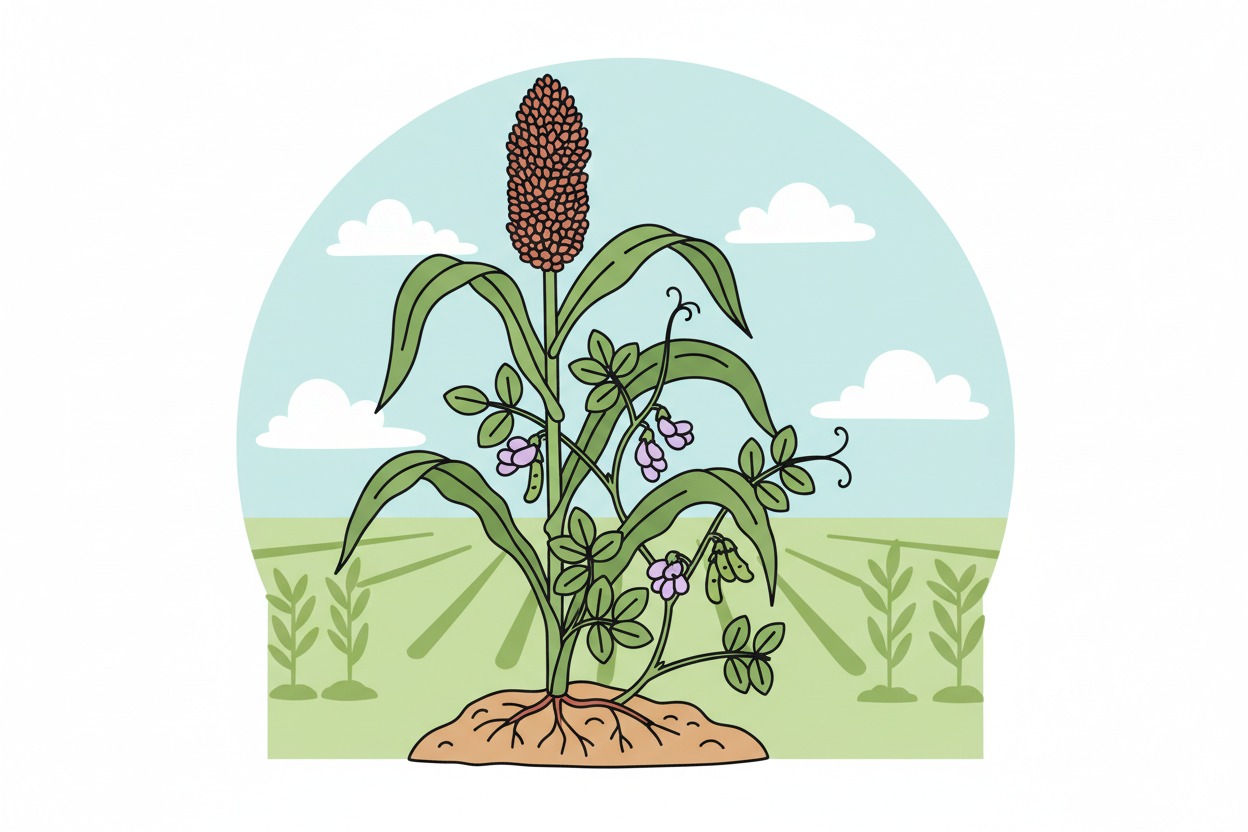
Grain production across Europe, Africa, and Australia is increasingly challenged by limited water availability. Although roots are essential for accessing soil water and nutrients, their traits and functions remain poorly understood under field conditions. Measuring roots is difficult, and the lack of rapid, accurate, and functional phenotyping methods has slowed progress in breeding, agronomy, and precision agriculture. ORACLE addresses this gap by combining cutting-edge high-throughput root phenotyping technology developed in Australia with molecular root–soil biology research from Germany to evaluate how root traits contribute to drought resilience and resource-use efficiency.
The project focuses on sorghum, a globally important drought-tolerant cereal used as a staple food, livestock feed, cash crop, and bioenergy source. By combining sorghum with legumes such as cowpea, ORACLE investigates how root architecture, soil interactions, and rhizosphere processes influence water- and nitrogen-use efficiency under different management practices and climatic conditions. Field trials in Ethiopia and Australia, together with controlled experiments, modelling, and molecular analyses, aim to generate practical insights for breeding programmes and agronomic strategies, supporting the development of more sustainable and climate-resilient cropping systems.
Objectives
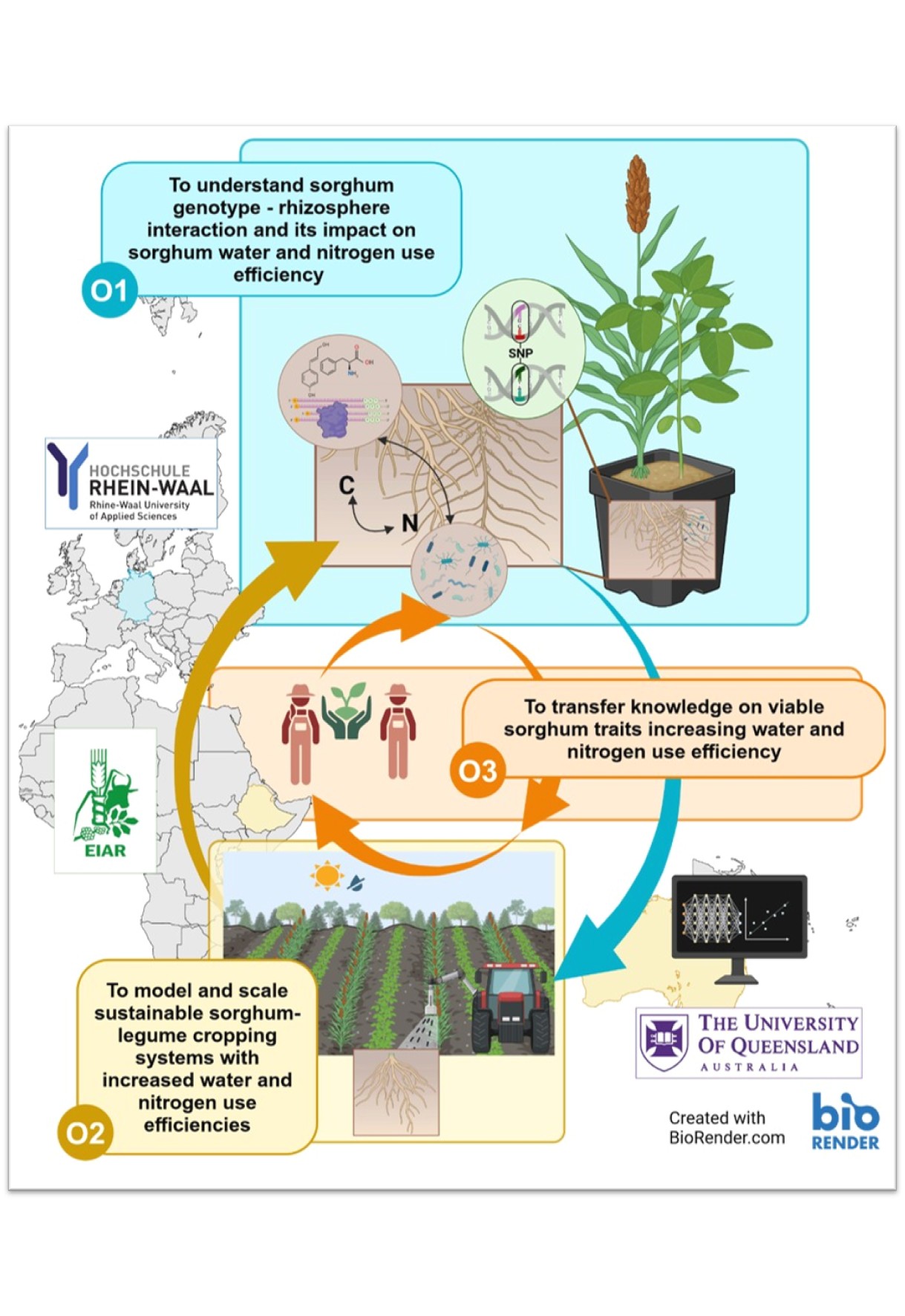
- O1 – Understand sorghum root and rhizosphere interactions. Investigate how sorghum genotypes, root traits, soil microorganisms, drought and intercropping influence water and nitrogen use efficiency.
- O2 – Optimise resilient sorghum–legume cropping systems Identify and model suitable combinations of sorghum genotypes, legumes and management practices for improved drought resilience and resource-use efficiency.
- O3 – Transfer knowledge into practice. Translate project findings into useful information for breeders, researchers and farmers to support the development of more resilient sorghum-based cropping systems.